
Isolation Amplifies Drift: When Remote Operations Make Small Deviations Invisible
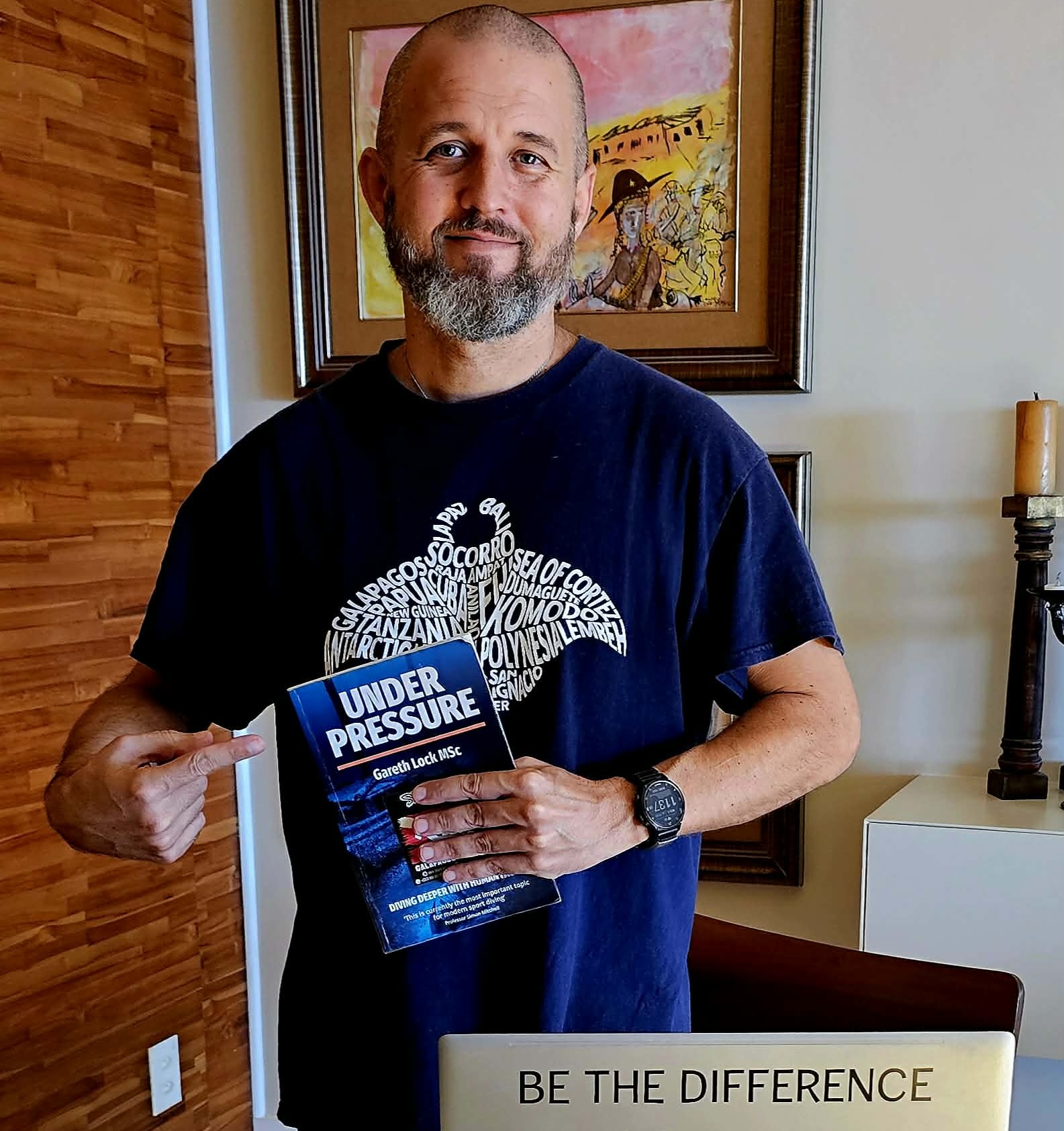 by: Michael John SnowPublished on: 15/03/2026
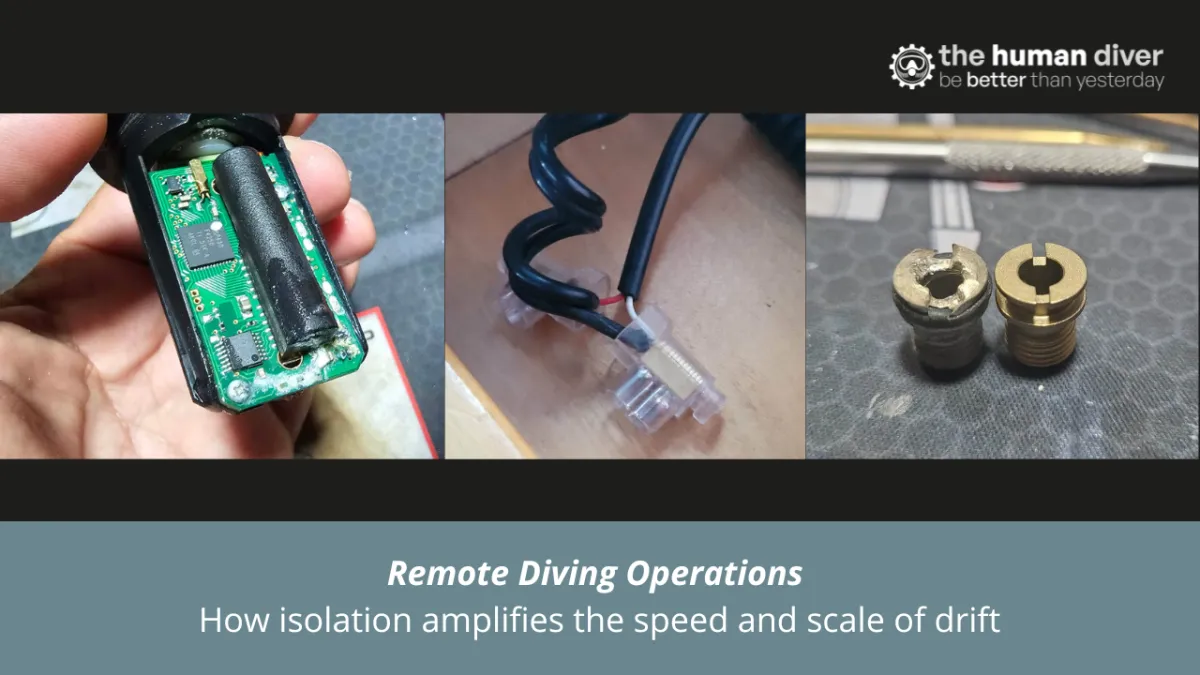
Isolation changes how systems see themselves. In remote operations, small irregularities often become normal because feedback is limited, interruption is costly, and teams prioritise continuity. What looks like sudden failure is often the visible endpoint of slow, invisible drift shaped by system structure.
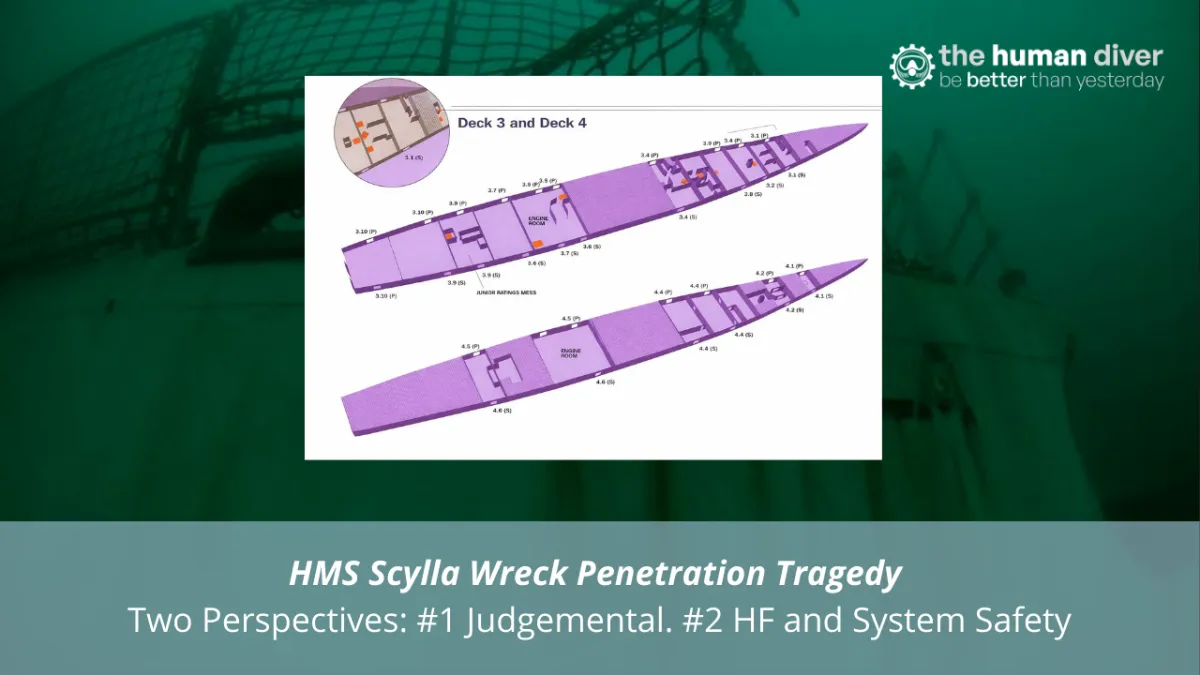
HMS Scylla Wreck Penetration Tragedy: Two Perspectives on Learning
 by: Gareth LockPublished on: 11/03/2026
Two divers died penetrating HMS Scylla's engine room. This LEODSI analysis contrasts blame-focused social media narratives with systems thinking, revealing how experience, time pressure, and environmental assumptions interacted to produce tragedy—not individual failure but systemic factors needing improvement.
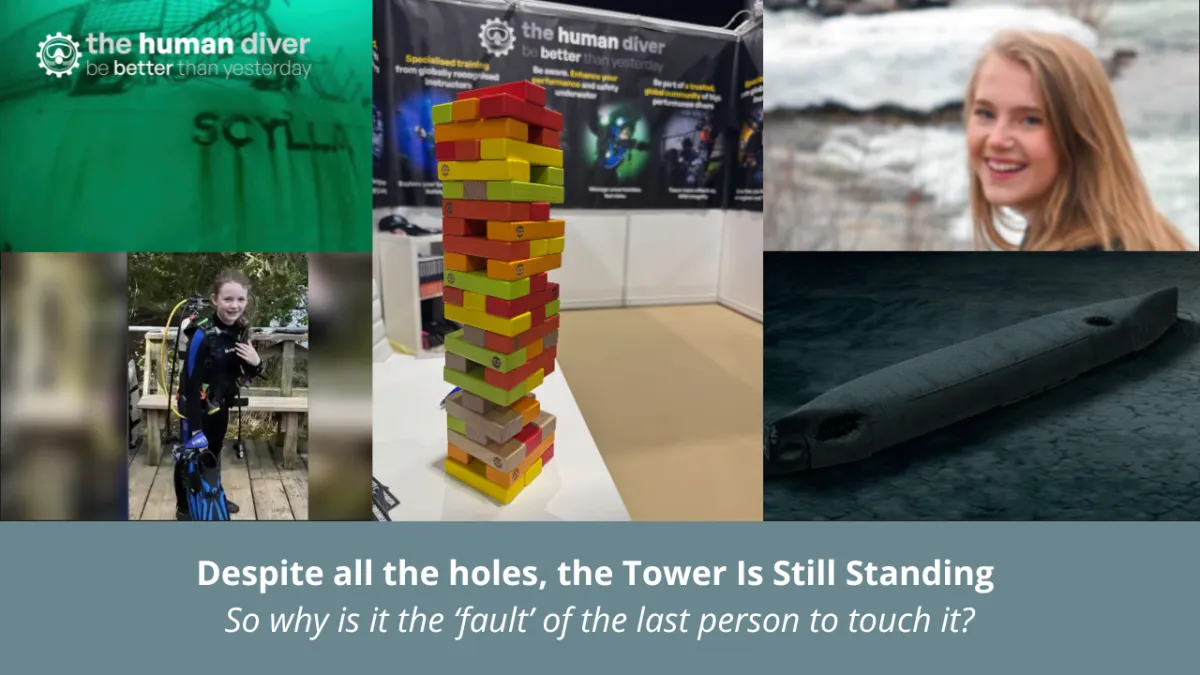
The Tower Was Already Full of Holes
by: Gareth LockPublished on: 03/03/2026When diving incidents occur, we blame the last person to touch the tower. But the holes were already there. Real learning comes from asking "how did it make sense?" not "who's to blame?" Systems thinking changes everything. Be better than yesterday.
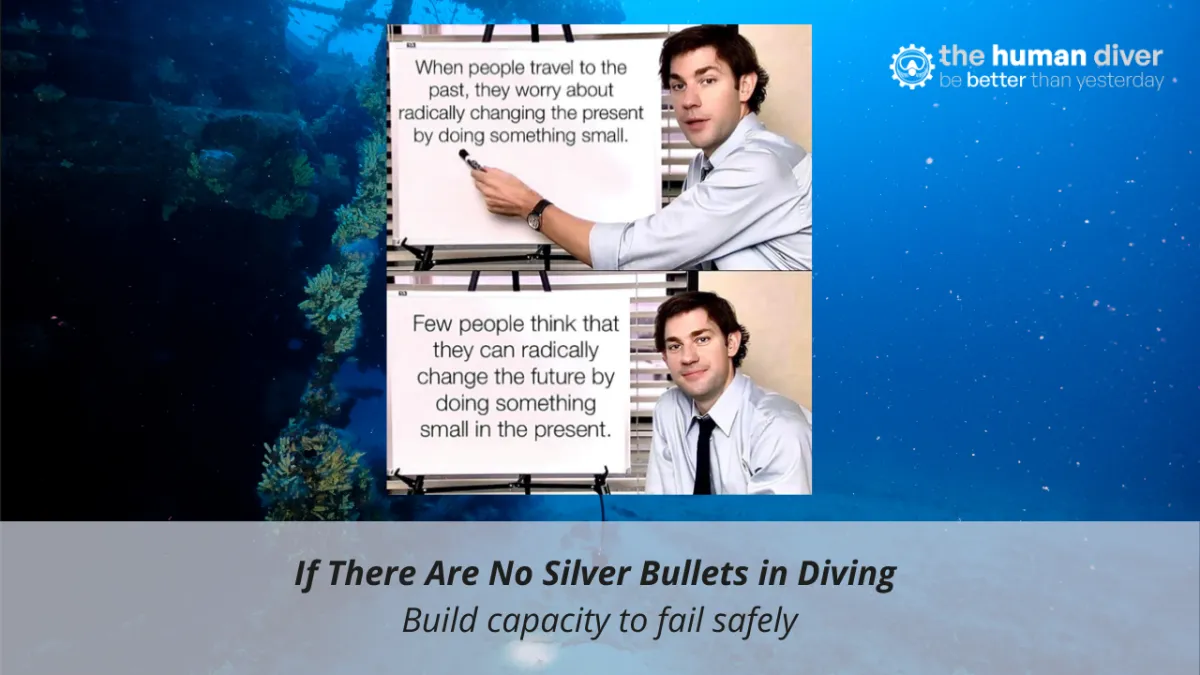
If there are no silver bullets, build capacity to fail safely
by: Gareth LockPublished on: 09/02/2026Diving can’t copy aviation oversight, but it can build margin and capacity. This blog explores how commercial pressure, instructor trade-offs, and system design drive drift—and why improving safety means shifting from compliance to capacity, aligning incentives, and making learning visible.
The humaN DIVER
Be better than yesterday.
Human factors, non-technical skills and learning from emergent outcomes for the divers who refuse the bad-apple story.
programmes
The humaN DIVER
© 2026 The Human Diver. All rights reserved.
Built for the 1%
Contact Menu
© 2026 The Human Diver